
Table of Contents
Towering red rock formations, mystical energy vortexes, and spectacular hiking trails—Sedona captivates travelers with a landscape unlike anywhere else on Earth. These crimson cliffs, sculpted over 300 million years from the ancient Schnebly Hill Formation, rise dramatically from the high desert floor, their fiery hues created by iron oxide deposits that catch the sun’s shifting light.
Long before Sedona became an artist colony, the Yavapai-Apache people considered these red rocks sacred ground. Modern Sedona began in 1902 when settler T.C. Schnebly established a homestead here, naming it after his wife. By the mid-1940s, artists like surrealist painter Max Ernst discovered Sedona’s inspiring landscapes, leading to the establishment of the Sedona Arts Center in 1958.
Today, Sedona welcomes 3-4 million visitors annually who come to experience outdoor adventure, spiritual exploration, and artistic culture. Sedona sits at 4,350 feet elevation in Arizona’s high desert, offering cooler temperatures than Phoenix and stunning night skies—the town earned International Dark Sky Community certification in 2014. Sedona is located 110 miles south of Grand Canyon’s South Rim, approximately 2 hours 15 minutes via US-89A North, making it easy to combine two of Arizona’s most iconic destinations.
This guide features 12 carefully curated experiences that showcase the best of Sedona, from bucket-list hikes to thrilling jeep tours and Grand Canyon day trips.
Before You Go: Essential Sedona Information
Elevation: 4,350 feet above sea level
Red Rock Pass: Most Sedona trailheads require a Red Rock Pass ($5 per day, $15 per week, or $20 annually). Purchase at the Sedona Chamber of Commerce, Forest Service offices, or through Recreation.gov.
Best Time to Visit: March-May and September-November offer ideal weather (60s-80s°F). Summer brings 90°F+ temperatures and monsoons. Winter can include occasional snow.
Distance from Major Cities: Phoenix Sky Harbor Airport is 2 hours south. Flagstaff is 30 miles north.
Free Sedona Shuttle: Avoid parking headaches with the free Verde Lynx shuttle service running Thursday through Sunday, 7am-5:30pm. Park at Posse Grounds Park & Ride and catch shuttles to popular trailheads and downtown Sedona.
The 12 Best Things to Do in Sedona
1. Hike to Devil’s Bridge
Devil’s Bridge is Sedona’s largest natural sandstone arch at 54 feet high and 45 feet across. This iconic hike delivers one of Arizona’s most photographed views, with brave souls walking onto the massive arch for dramatic photos framed by sweeping red rock panoramas.
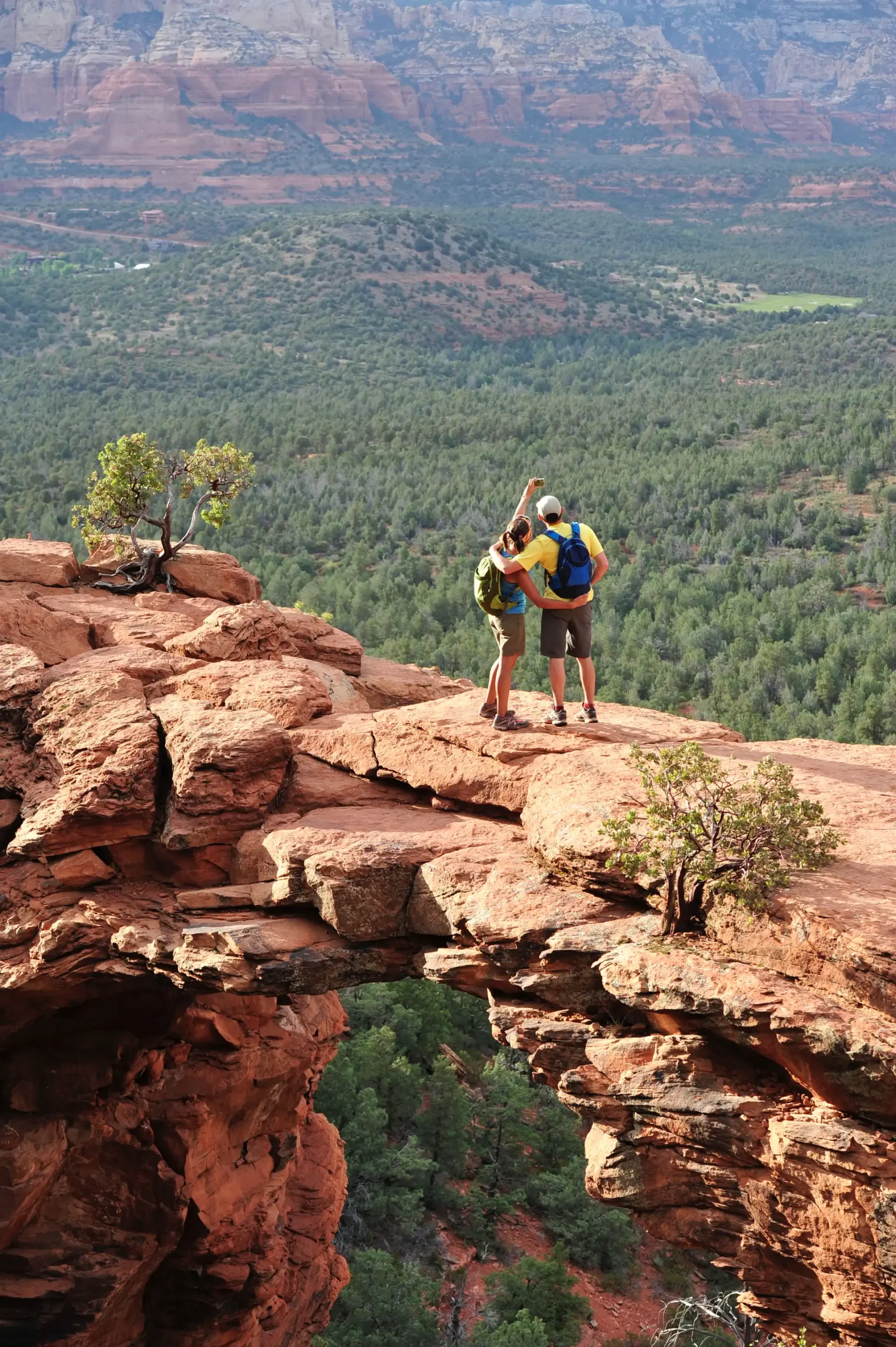
The hike ranges from 2 to 4.6 miles roundtrip depending on your trailhead. The shorter route starts from Devil’s Bridge Trailhead (high-clearance vehicle recommended for the rough 1.3-mile access road), while the longer Mescal Trailhead route offers easier parking access. The trail ascends gradually through juniper and manzanita before reaching the arch via a short but steep slickrock scramble. The final approach involves some exposure, but most hikers with moderate fitness can complete it.
Arrive before 7am to beat crowds and secure parking—this is Sedona’s most popular hike, attracting hundreds of visitors daily during peak season. Most Sedona trailheads require a Red Rock Pass ($5 per day), available for purchase at the trailhead or online. The moderate trail takes 1.5-3 hours total, and the stunning payoff makes every step worthwhile.
2. Experience the Spiritual Energy at Cathedral Rock
Cathedral Rock rises from the desert like a natural cathedral, its twin spires and layered red cliffs creating one of Sedona’s most recognizable landmarks. But this isn’t just a pretty viewpoint—Cathedral Rock is considered the strongest magnetic vortex in Sedona, a place where the earth’s energy swirls upward in spiraling patterns. Visitors report feeling tingling sensations, heightened awareness, or deep emotional experiences while meditating or simply absorbing the landscape.
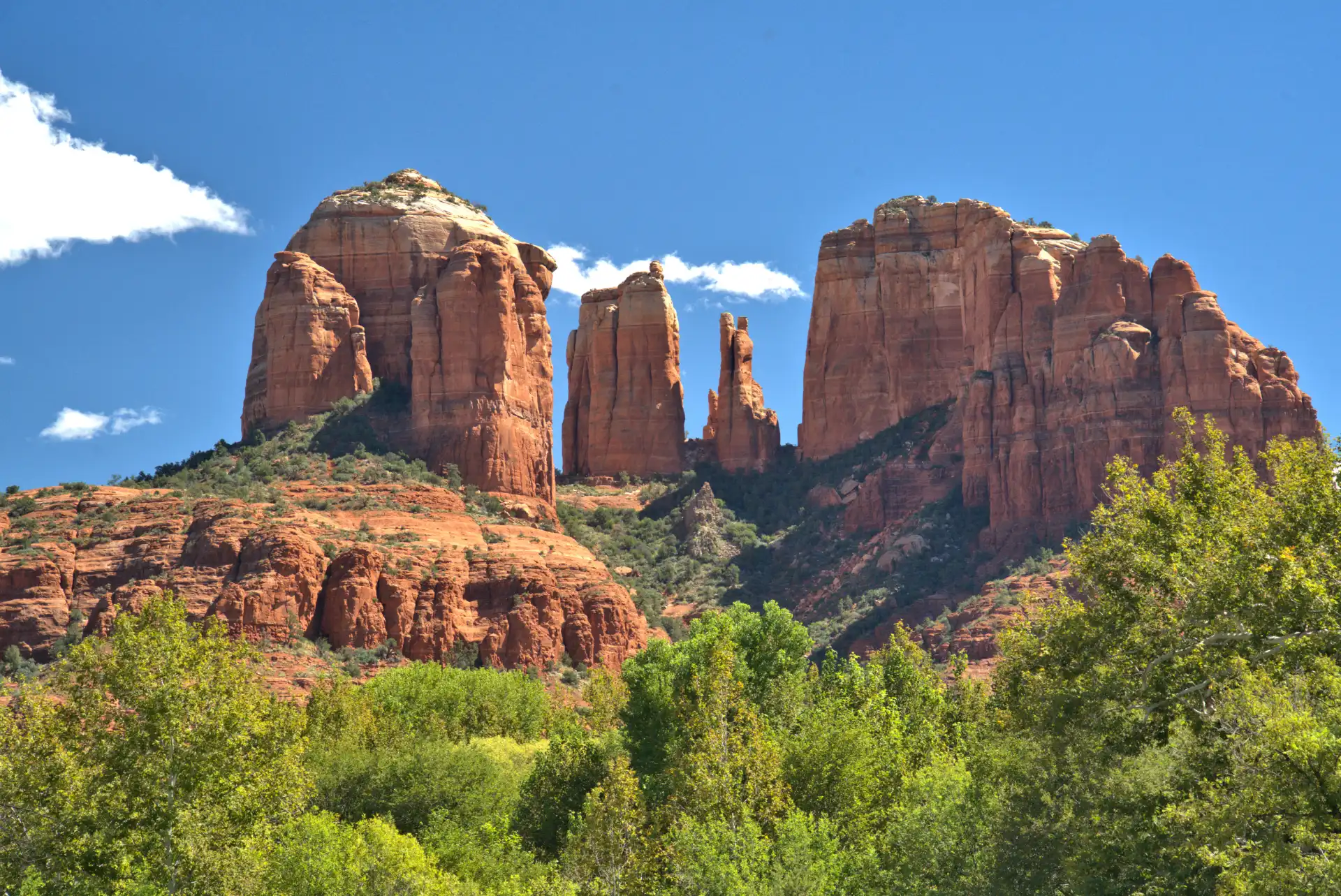
The Cathedral Rock Trail covers 1.1 miles roundtrip with 669 feet of elevation gain packed into that short distance, making this a steep but achievable climb for anyone with moderate fitness. As you ascend the slickrock faces using natural footholds and occasional cairn markers, you’ll understand why this site embodies “feminine energy” in vortex lore—the experience feels nurturing and grounding rather than energizing.
Note that parking at the Cathedral Rock Trailhead is closed Thursday through Sunday due to overcrowding. On these days, use the free Verde Lynx shuttle from Posse Grounds Park & Ride. The trail requires a Red Rock Pass and involves some scrambling, so wear grippy hiking shoes and bring plenty of water.
3. Take a Pink Jeep Tour Through the Backcountry
Since 1960, Pink Jeep Tours has been bouncing adventurous visitors across Sedona’s rugged terrain in custom-built pink Jeep Wranglers. These aren’t ordinary sightseeing tours—you’ll tackle extreme 4WD trails that climb steep slickrock faces at impossible-looking angles, navigate narrow canyons, and reach spectacular viewpoints completely inaccessible to regular vehicles.
The Broken Arrow Trail ranks as the most famous route, taking you over roller-coaster terrain past Submarine Rock, Chicken Point, and other geological wonders while your guide shares stories about Sedona’s geology, history, and legends. Tours range from 2-hour adventures to sunset excursions and full-day combinations. Starting around $100 per person for 2-hour tours, these experiences deliver thrills and scenery you simply can’t access on your own.
Book in advance, especially during peak season (March-May and September-November). Tours run rain or shine, and the open-air Jeeps mean you’ll want layers and sunscreen regardless of the season.
4. Visit the Chapel of the Holy Cross
Rising from the red rocks like a modern architectural miracle, the Chapel of the Holy Cross seems to grow directly from the 250-foot cliffs that surround it. Completed in 1956 from a design by local rancher and sculptor Marguerite Brunswig Staude, this Roman Catholic chapel features a towering 90-foot cross embedded in its facade and floor-to-ceiling windows that frame Cathedral Rock and the Sedona landscape.
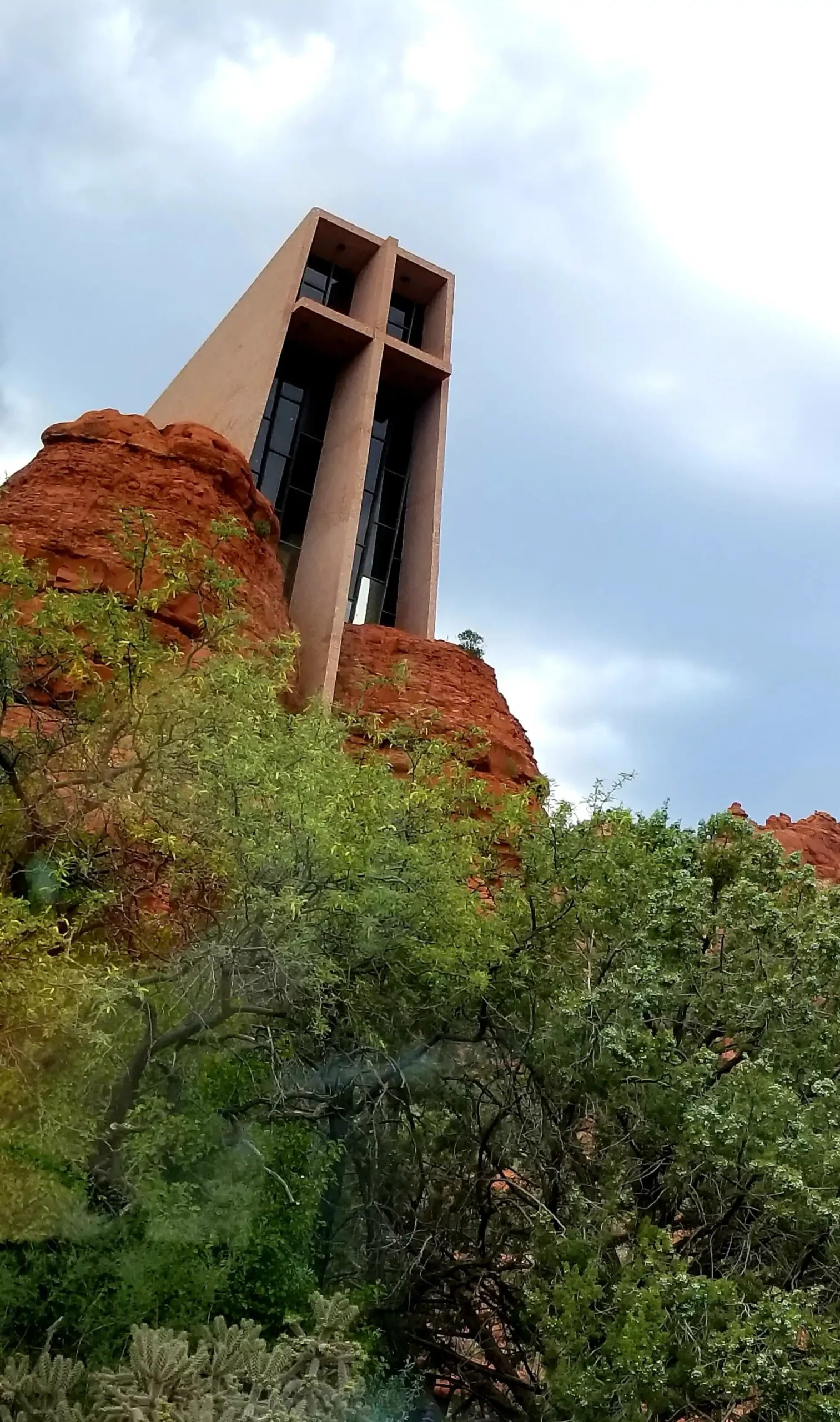
The chapel welcomes visitors free of charge daily from 9am to 5pm, making it one of Sedona’s most accessible attractions. Inside, the intimate sanctuary seats about 100 people, and the reverent atmosphere invites quiet contemplation regardless of your religious background. The views from the chapel grounds alone justify the visit.
Here’s the catch: only 45 parking spaces serve this immensely popular site. Arrive early morning (before 9:30am) or late afternoon (after 3:30pm) for the best chance at parking. The short paved path from the parking area to the chapel is accessible, though the lot itself perches on a steep hillside.
5. Explore Sedona’s Four Major Energy Vortexes
Sedona’s vortexes have drawn spiritual seekers since the 1980s when psychic Page Bryant first mapped these sites of concentrated earth energy. Whether you’re a true believer or simply curious, visiting these spots offers access to some of Sedona’s most stunning landscapes and provides a unique window into what makes this place spiritually significant to so many.
The four main vortex sites each carry distinct energy signatures. Cathedral Rock (covered above) radiates feminine, nurturing energy. Bell Rock, accessed via the Bell Rock Pathway, creates another powerful upward-spiraling vortex and requires no scrambling to experience. Airport Mesa offers the easiest access with a paved trail to the summit and 360-degree views—many visitors report this as the most energizing vortex. Boynton Canyon, considered the most sacred site by the Yavapai-Apache people, balances both masculine and feminine energies and requires a moderate 3-mile roundtrip hike.
Visit early morning or late afternoon to avoid crowds and allow time for quiet meditation or simply absorbing the remarkable scenery. You’ll notice juniper trees with twisted, spiraling trunks near vortex sites—local lore says they grow this way from the energy, though botanists attribute it to wind patterns.
6. Drive the Red Rock Scenic Byway (State Route 179)
State Route 179, an All-American Road, winds 15 miles from I-17 through the Village of Oak Creek into uptown Sedona, delivering non-stop views of Bell Rock, Courthouse Butte, and Cathedral Rock.
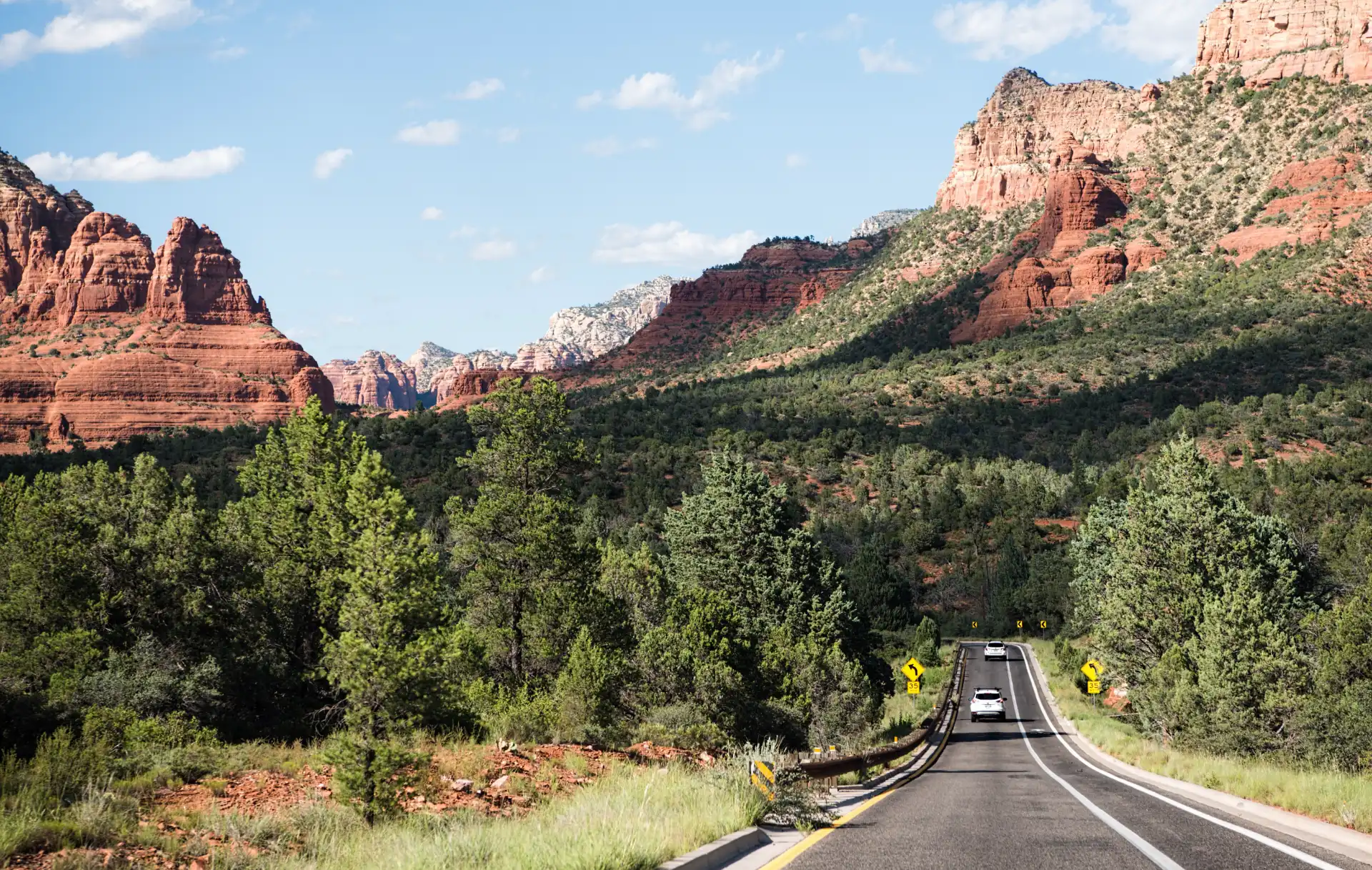
Multiple pull-offs allow stops for photos or to absorb views that look like landscape paintings. Bell Rock Vista offers wheelchair-accessible viewing platforms and interpretive signs. Early morning and late afternoon provide the best lighting, with red rocks glowing amber and crimson.
The drive takes 25 minutes without stops, but allow an hour to appreciate this scenic corridor. Combine it with SR-89A through Oak Creek Canyon for a longer loop.
7. Float Above the Red Rocks in a Hot Air Balloon
Drifting silently above Sedona’s crimson landscape as the rising sun paints the rocks gold and scarlet ranks among the area’s most memorable experiences. Balloon flights launch at dawn, lifting you 1,000-2,000 feet for an hour to 90 minutes of peaceful floating.
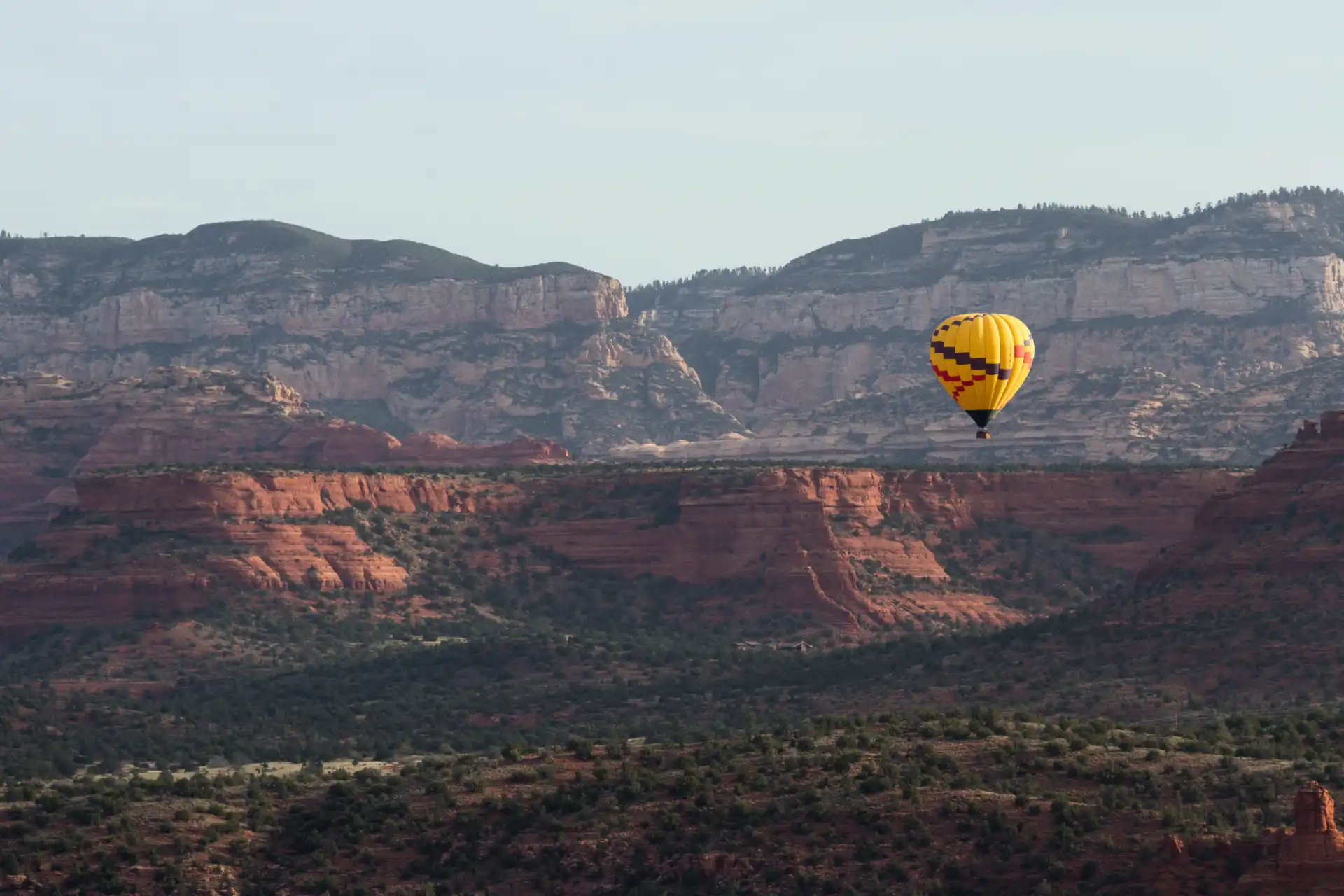
Only two companies hold Forest Service permits: Northern Light Balloon Expeditions and Red Rock Balloon Adventures. Flights cost around $375 per person and include pre-flight coffee and a champagne toast. The experience begins as you watch crews inflate the balloons, then builds to awe as you rise with the sun.
Book well in advance during peak season. High winds can cause cancellations.
8. Taste Local Wines in Verde Valley
The Verde Valley has emerged as a wine-producing region with vineyards cultivating over 100 grape varieties. Elevation (3,200-4,500 feet) and dramatic temperature swings create ideal conditions for bold reds and crisp whites.
Guided wine tours from Sedona visit 3-4 tasting rooms for around $95 per person, including transportation, tastings, and often lunch. Popular stops include Javelina Leap Winery, Page Springs Cellars, and Oak Creek Vineyards.
Alternatively, drive 20 minutes to Cornville or Page Springs yourself. Most wineries welcome visitors daily, though weekends may require reservations during peak season.
9. Cool Off at Slide Rock State Park
When summer temperatures climb into the 90s, head to Slide Rock State Park for Arizona’s most famous natural water slide. An 80-foot stretch of smooth creek bed has been worn into natural chutes by Oak Creek, creating an exhilarating ride.
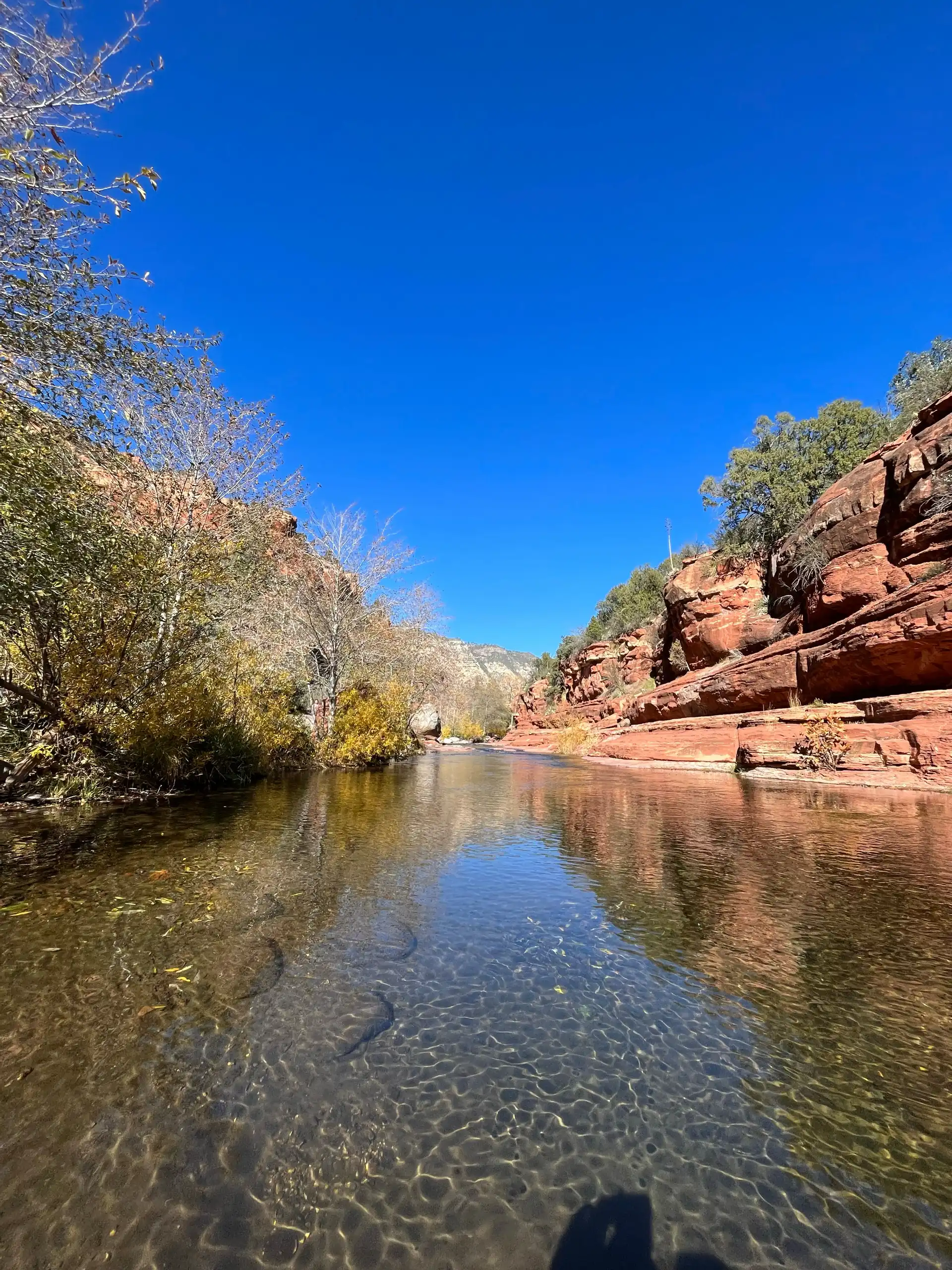
The park charges $30 per vehicle May-September ($20 off-season) and fills quickly on hot weekends—arrive before 10am or visit weekdays. Entry is by vehicle only. Beyond the slide, Oak Creek offers swimming holes and shaded picnic areas.
Wear water socks (the rock can be rough on bare feet) and expect to get soaked. The water stays cool at around 60°F year-round.
10. Mountain Bike the Bell Rock Pathway
Sedona has earned a reputation as a world-class mountain biking destination, but most trails challenge experienced riders. The Bell Rock Pathway stands out as the only “green” beginner trail in Sedona, offering 3.6-4 miles of relatively flat path with spectacular views of Bell Rock and Courthouse Butte.
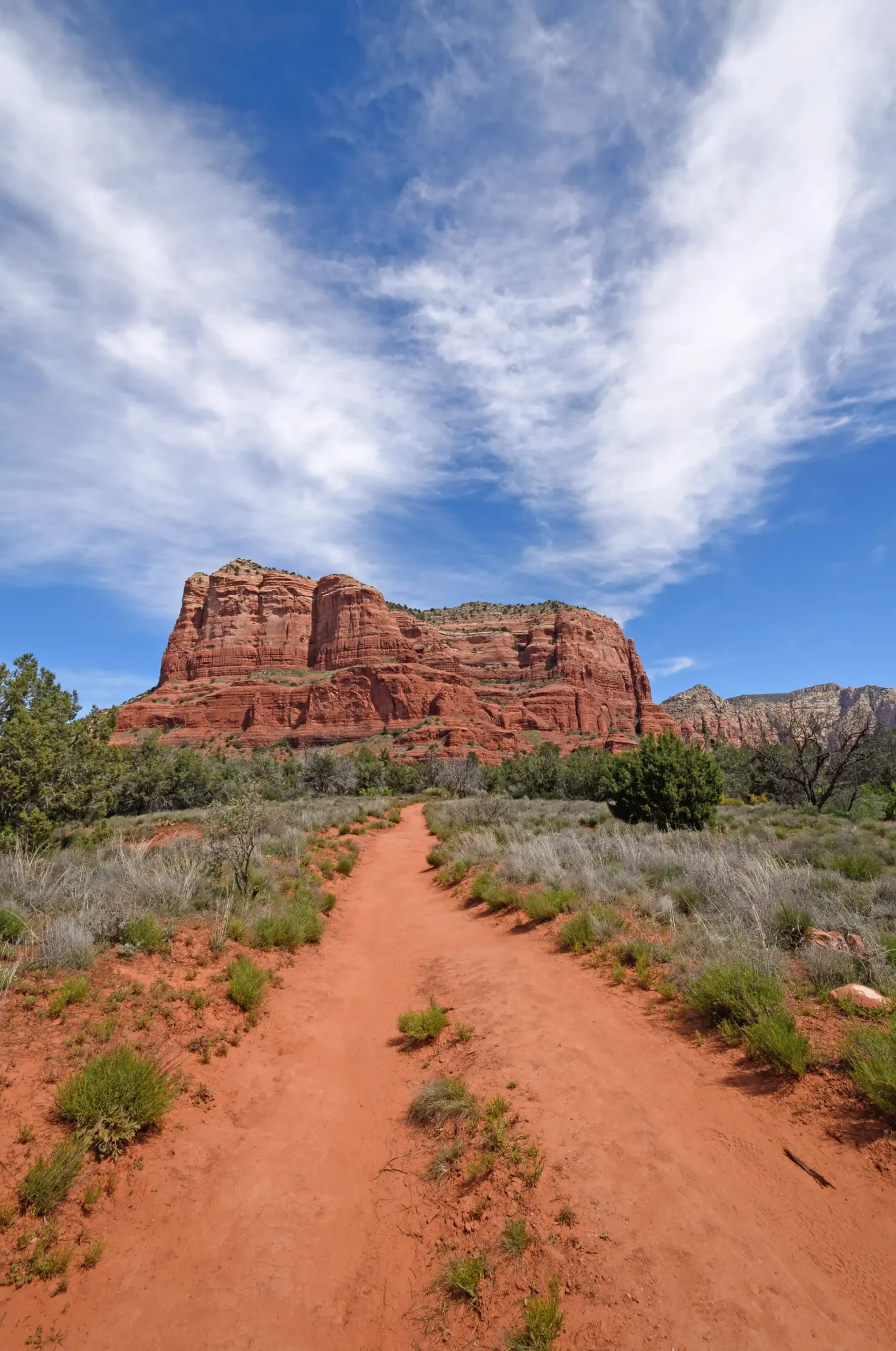
The crushed granite pathway parallels SR-179 but feels removed from traffic as it winds through high desert vegetation. Bikers share the trail with hikers and can connect to challenging routes like Courthouse Loop for extended rides.
Bike rentals start around $50-75 per day. The trailhead requires a Red Rock Pass. Ride early morning or late afternoon when temperatures are cooler and lighting is best.
11. Witness World-Class Stargazing
Sedona earned International Dark Sky Community certification in 2014. On clear nights, the Milky Way stretches overhead, planets shine bright enough to cast shadows, and meteor showers put on spectacular shows.
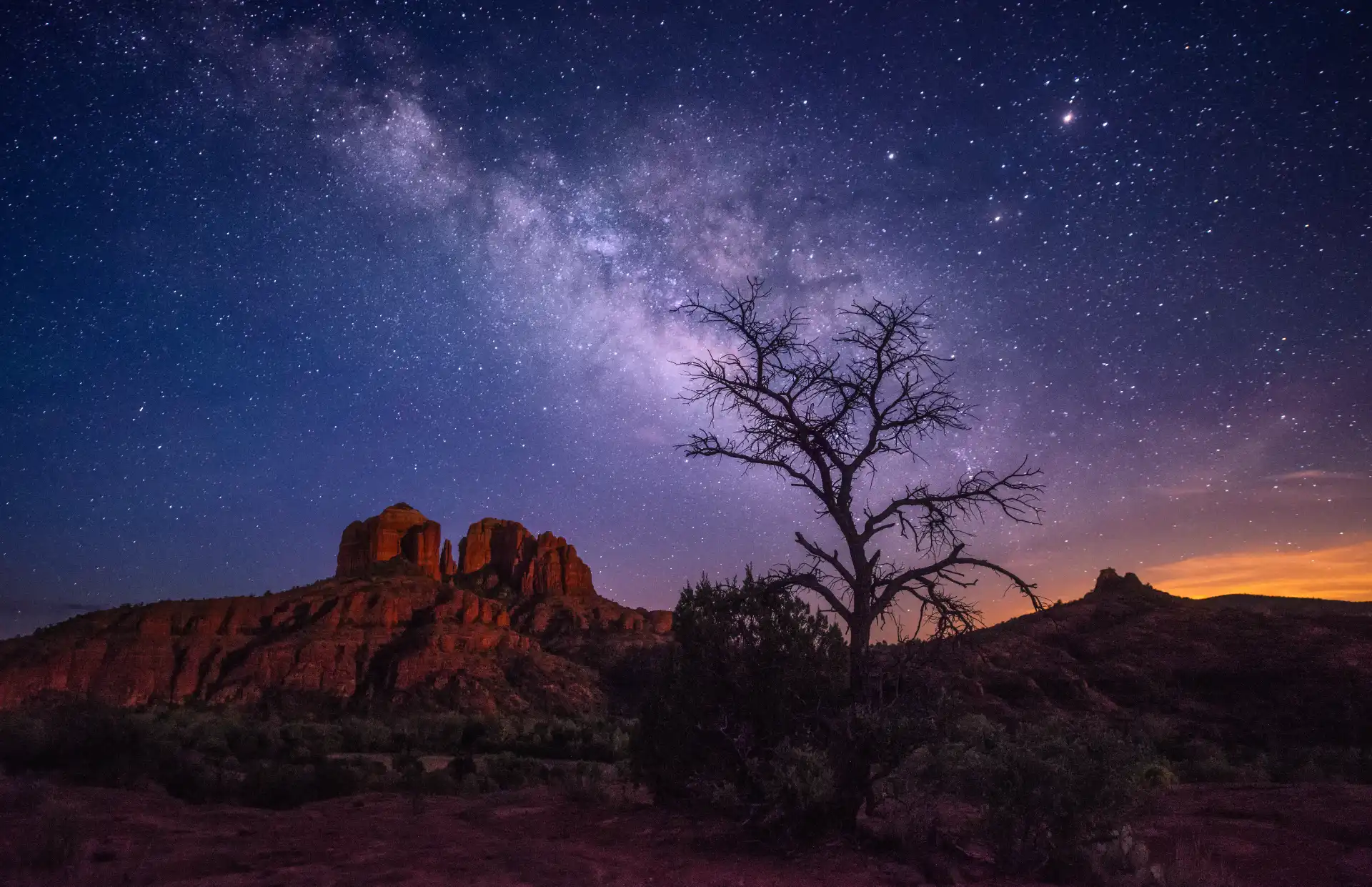
Prime stargazing locations include Baldwin Trailhead (minimal light pollution), Merry Go Round Rock (360-degree views), and Airport Mesa (convenient with expansive sky views). Spring through fall provides the best conditions, though summer monsoons bring cloud cover. Winter offers excellent viewing but requires warm layers.
Bring a blanket and download a star-identification app like SkyView. Give your eyes 20-30 minutes to adjust to darkness. No special equipment needed, though binoculars reveal more.
12. Day Trip to Grand Canyon National Park
Sedona’s red rocks are magnificent, but just 110 miles north lies one of the Seven Natural Wonders. Grand Canyon’s South Rim sits approximately 2 hours 15 minutes from Sedona via US-89A North through Oak Creek Canyon and Flagstaff—a scenic drive in itself.
🚗 Check our Sedona to Grand Canyon driving guide here
Self-drive offers maximum flexibility at viewpoints like Mather Point, Yavapai Point, and Desert View. Entrance fees are $35 per vehicle (valid 7 days). Alternatively, guided day trips handle logistics, with some including Native American cultural sites.
Helicopter tours fly directly from Sedona to Grand Canyon, offering aerial views and landing at the rim. These premium tours start around $500 per person but deliver unforgettable perspectives.
The combination of Sedona’s red rock beauty and Grand Canyon’s overwhelming grandeur creates the ultimate Arizona experience. Many visitors plan 3-4 days in Sedona with a full day dedicated to Grand Canyon.
3 Local Insider Tips for Avoiding Crowds
Master the Free Shuttle System
Popular trailheads fill by 8am on weekends, wasting valuable adventure time. The Verde Lynx shuttle solves this problem. Running Thursday-Sunday from 7am-5:30pm, the free shuttle picks up from Posse Grounds Park & Ride and stops at major trailheads including Bell Rock, Cathedral Rock, and downtown Sedona.
You’ll save time, eliminate stress, and reduce traffic congestion. Shuttles run every 20-30 minutes with air conditioning.
Embrace the Early Bird or Late Afternoon Strategy
Crowds descending on Sedona between 9am-3pm can turn peaceful hikes into traffic jams. Shift your schedule for a different experience. Sunrise hikes before 7am offer solitude, cooler temperatures, and magical light. Late afternoon adventures after 3pm mean thinning crowds and golden hour glow.
Tuesday-Thursday are the quietest days. Plan major hikes mid-week and save shopping and dining for weekends.
Discover Secret Trails Without the Crowds
Sedona hides dozens of lesser-known trails with stunning scenery and fewer crowds. Secret Slickrock Trail offers a 0.7-mile scramble to jaw-dropping Cathedral Rock views without the masses.
Baby Bell Rock, accessed from Courthouse Vista, provides a miniature version of Bell Rock that children love. Doe Mountain near Boynton Canyon requires a steep but short climb to a flat-topped mesa with 360-degree views.
Ask locals at bike shops or gear stores for hidden gems. Locals know where to find beauty without crowds.
Planning Your Perfect Sedona Adventure
Most visitors find that 3-4 days in Sedona provides enough time to hike several trails, take a jeep or balloon tour, visit the main vortex sites, and enjoy the town’s dining and shopping. That said, you can pack remarkable experiences into just 2 days if your schedule is tight—prioritize 2-3 bucket-list hikes, one guided tour, and the scenic drives.
The best seasons for visiting Sedona are March through May and September through November when temperatures range from the 60s to 80s°F and the desert landscape comes alive with wildflowers (spring) or golden foliage (fall). Summer visits are possible but require early morning starts to beat both crowds and heat, while winter brings cooler weather and occasional snow that transforms the red rocks into even more dramatic landscapes.
Remember that Sedona is located just 2 hours from Grand Canyon National Park—combining both destinations creates the ultimate Arizona adventure. Whether you self-drive, join a guided tour, or splurge on a helicopter flight, experiencing these two natural wonders in one trip offers dramatically different landscapes that showcase the incredible geological diversity of the American Southwest.
From the spiritual energy of ancient vortexes to the adrenaline rush of 4WD trails, from world-class hiking to wine country relaxation, Sedona delivers experiences that stay with you long after the red rocks fade from your rearview mirror. Start planning your Sedona adventure today, and consider adding a Grand Canyon day trip for an Arizona experience you’ll never forget.


Leave a Reply